Señales de que está regando demasiado o demasiado poco el césped
La cantidad de agua que necesita su césped puede ser difícil de calibrar a simple vista. Es especialmente difícil en Tejas, donde los veranos son calurosos y secos. Estos son algunos signos comunes de que tu césped puede estar regado en exceso o en defecto y lo que puedes hacer para solucionarlo.
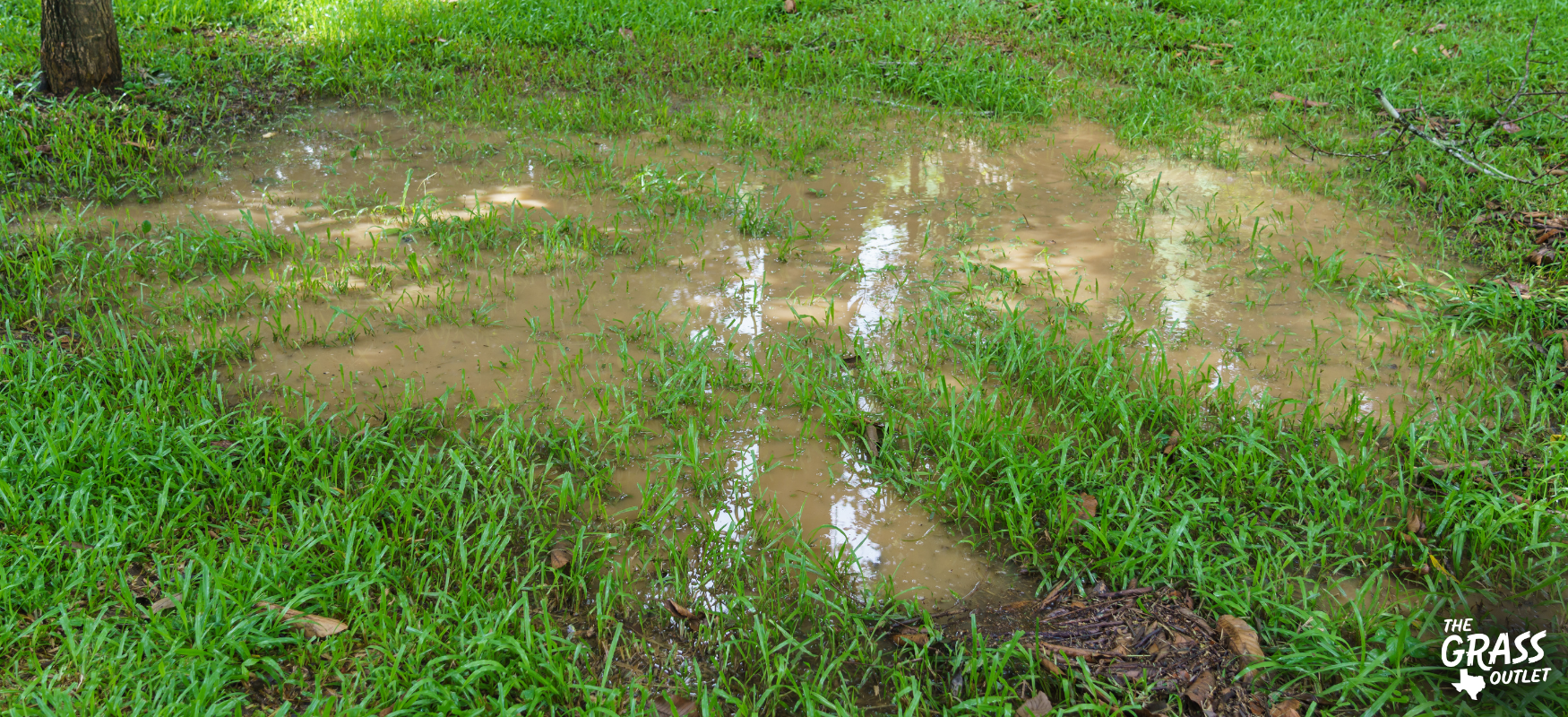
Signos de riego excesivo
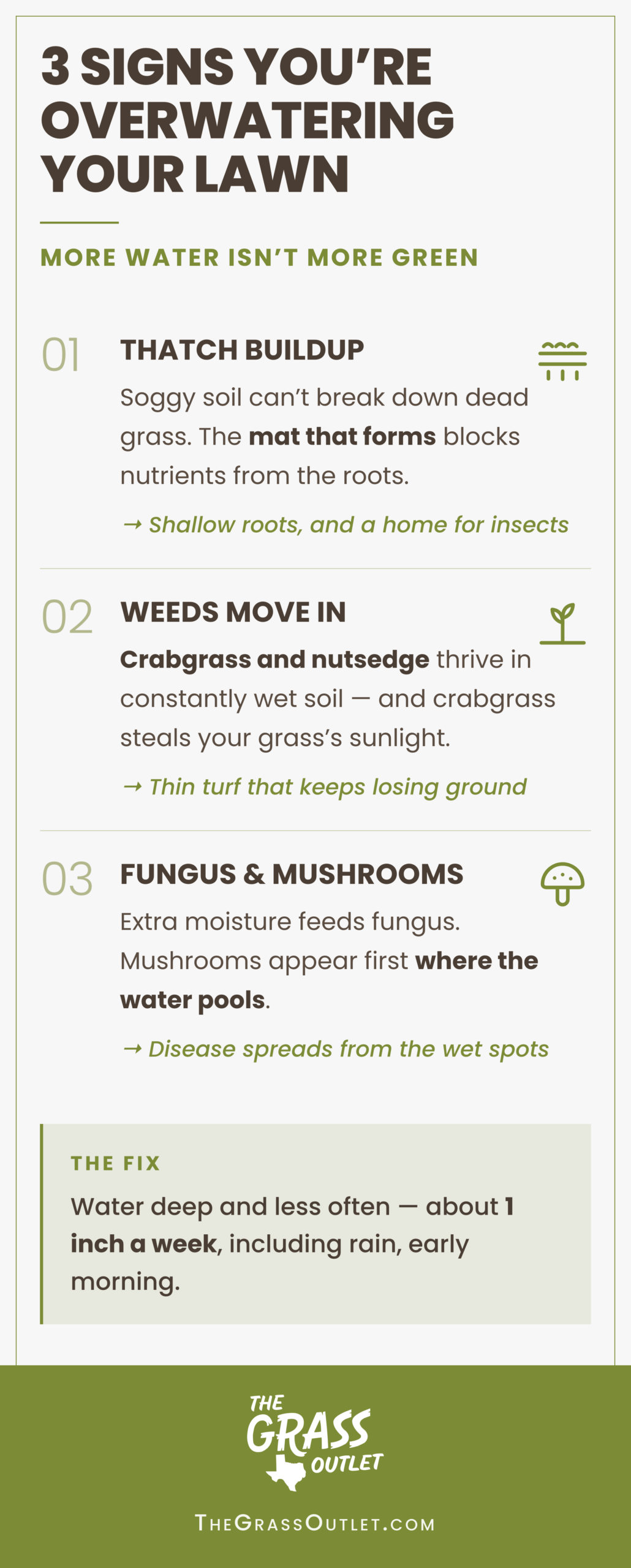
Paja
Too much moisture in your lawn could make it difficult for dead plant material to be broken down. The end result is thatch, a thick mat of partially decomposed grass roots and stems. Thatch can build up and prevent nutrients from reaching the roots of your lawn, leading to grass with shallow roots.
La paja también atrae a los insectos, convirtiéndola en el hábitat perfecto para que se instalen. Esto, a su vez, puede causar estragos en el césped y afectar a su salud.
Maleza
Overwatering your lawn can create the perfect conditions for certain types of weeds to grow, such as crabgrass and nutsedge. This can greatly affect the health of your lawn, with crabgrass spreading throughout your lawn quickly and affecting the amount of sunlight your grass gets.
Hongos
Excess moisture in your lawn can also make it easier for fungus to grow. This will often result in patches of mushrooms throughout your lawn, with a higher concentration on the areas that get the most water. The good news is that overwatering is usually easy to reverse — cut back to deep, infrequent watering and let the soil dry out between sessions, and your lawn will start to recover within a few weeks. Underwatering, on the other hand, shows up in very different ways.
Signos de sumersión
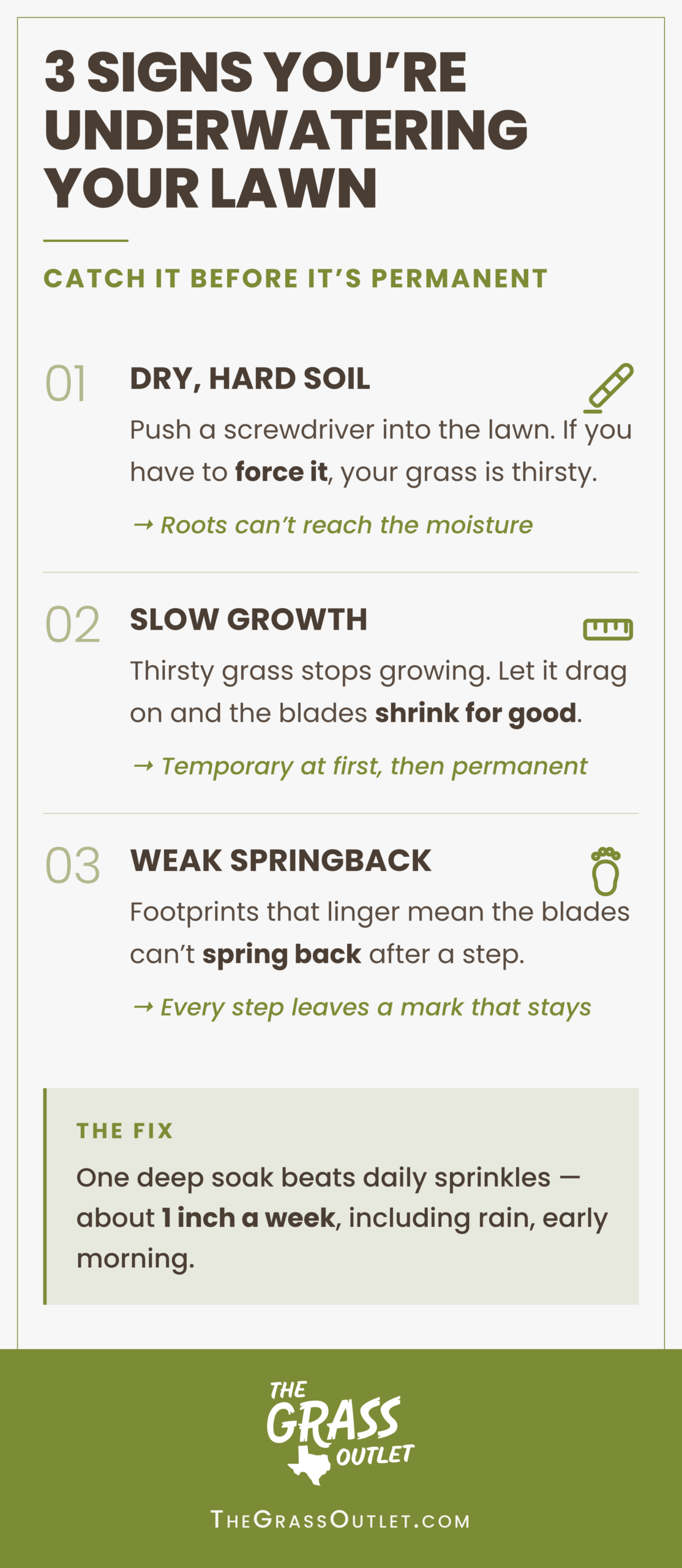
Suelo seco
La tierra seca es una señal clara de que el césped no recibe los nutrientes y la humedad que necesita para crecer sano. Una buena prueba para saber si la tierra está seca o no es utilizar un destornillador. Si el suelo está suficientemente húmedo, el destornillador debería penetrar en él con facilidad. Si el suelo está seco, el destornillador debería ser más difícil de empujar.
Crecimiento lento
Un crecimiento lento del césped puede ser señal de que no hay suficiente agua. Este cambio en el crecimiento puede ser temporal o permanente, dependiendo del tiempo que haya pasado sin agua. Cuanto más tiempo pase sin irrigación más probable es que provoque cambios permanentes en el tamaño de las cuchillas.
Retroceso elástico débil
Footprints will be more visible when your grass is under-watered due to the grass blades having less water. This prevents the grass from springing back up once they’re stepped on or disturbed. Underwatering is usually a quick fix — a deep, thorough soak brings a thirsty lawn back to life, as long as it hasn’t been left dry for too long. Whether you’re watering too much or too little, it all comes down to getting the amount right.
¿Cuál es la cantidad adecuada de agua?
Una pulgada de agua a la semana suele ser suficiente para la mayoría de los tipos de césped, pero lo mejor es determinar la cantidad ideal para su tipo de césped preguntando a un profesional. Puede ser difícil determinar la cantidad de agua a simple vista, por lo que utilizar un pluviómetro es una buena forma de solucionarlo.
Utilizar un sistema de riego puede facilitar el trabajo. Por desgracia, es fácil dejar el sistema de riego encendido durante demasiado tiempo si no se tiene cuidado. Para solucionarlo, existen en el mercado diversos aspersores inteligentes que pueden medir la cantidad correcta de agua que se debe utilizar. Son una herramienta práctica que no sólo reducirá la cantidad de agua utilizada para su césped, sino que también le permitirá gestionar su sistema a distancia.
How to Avoid Overwatering
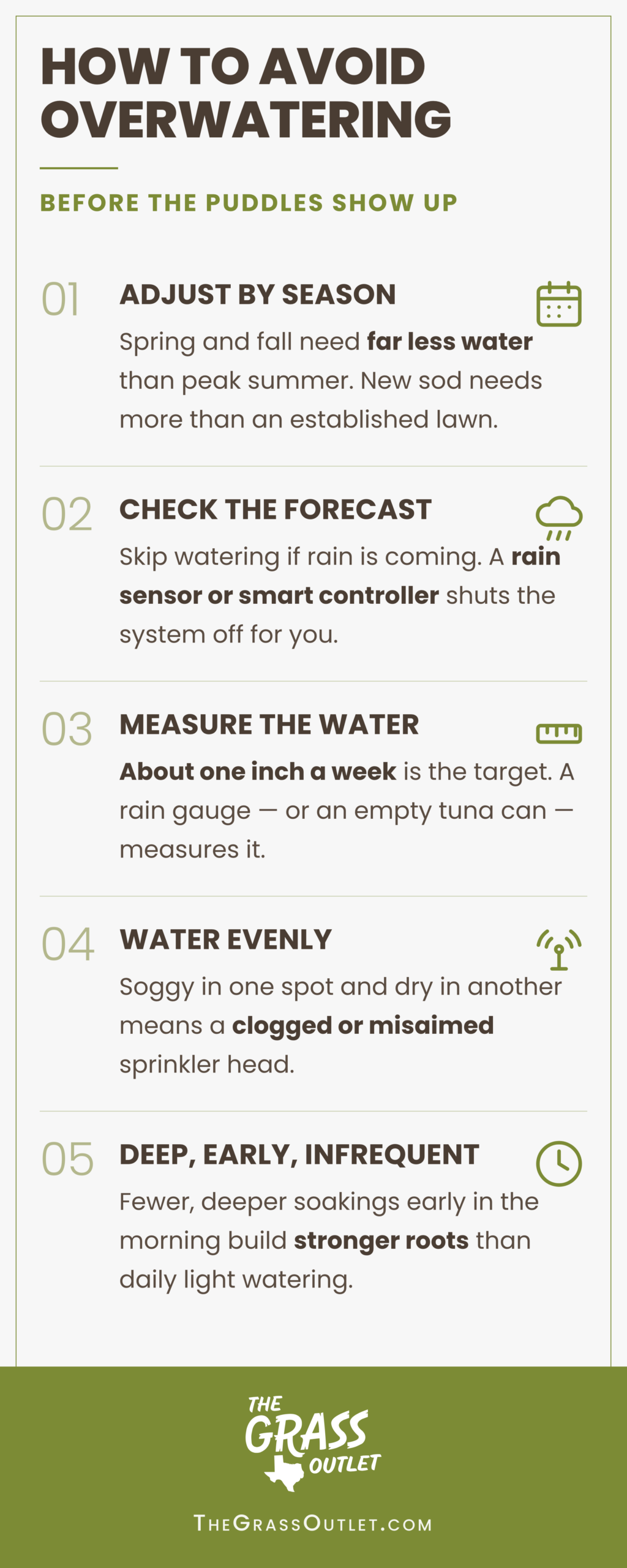
Most people don’t realize they’re overwatering until puddles show up. A few habits prevent it:
- Don’t set your sprinklers and forget them. Adjust the schedule with the seasons — a lawn needs far less water in spring and fall than in peak summer, and césped nuevo needs more than an established lawn.
- Check the forecast. Skip watering if rain is coming, and use a rain sensor or smart controller that shuts the system off during rain.
- Measure with a rain gauge. Most lawns need about one inch of water per week — a gauge (or an empty tuna can) tells you when you’ve hit it.
- Water evenly. If one area is soggy while another stays dry, check for clogged or misaimed sprinkler heads.
- Water deep and infrequent, early in the morning. Fewer, deeper soakings build stronger roots than daily light watering.
Un césped bien regado es un césped sano
By following a proper watering schedule and keeping an eye on the amount of water that your lawn gets, you can ensure that it survives the hot summer months in Texas. The right balance keeps your grass green and resilient while avoiding the fungus, thatch, and shallow roots that overwatering causes — and it saves water and money along the way. Watch for the signs above, adjust your watering with the seasons, and your lawn will reward you all year long.
Need sod for your home or project?
The Grass Outlet has you covered! Visit our online store and see all the varieties of grass we have available.
Visit Our Shop